Reduce compaction so water, air, and nutrients reach the roots. From $125.
Fall aeration season
Online booking covers properties up to a quarter acre, roughly 10,890 sq. ft. For anything larger, get in touch and we will quote it.
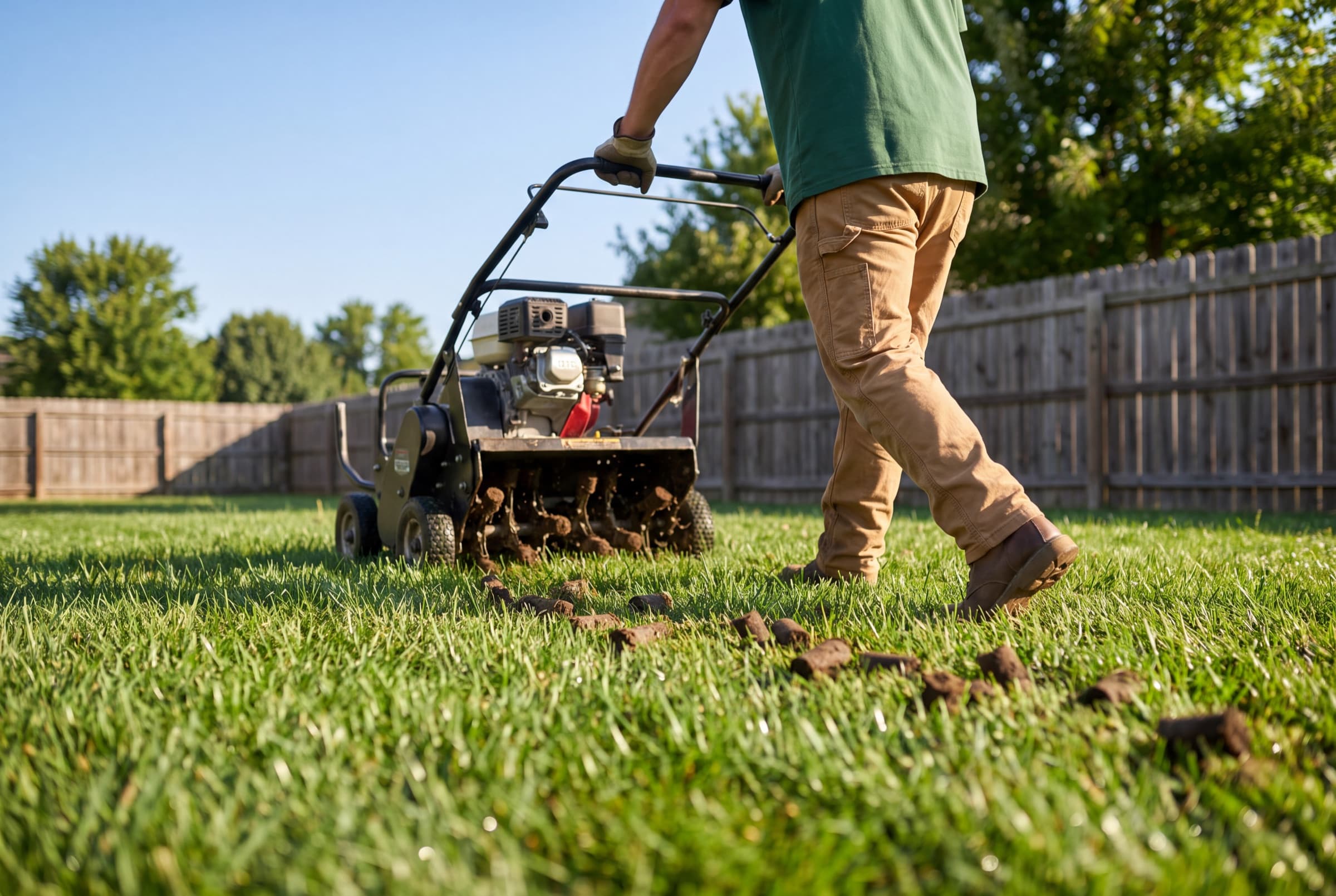
Core aeration helps reduce soil compaction and allows water, air, and nutrients to better reach your lawn's roots, promoting healthier and stronger grass.
Compacted clay sheds water rather than absorbing it, so a lawn can be watered right on schedule and still never get a proper drink. The window runs from the end of August through October, when cooler soil means faster recovery.
Water goes down instead of sideways
Channels give irrigation somewhere to go. Less runoff onto the sidewalk, more water in the root zone, and annual aeration can cut what the lawn needs by up to 25 percent.
Roots get room and air
Grass roots cannot push through tight clay. Relieving the compaction lets them grow deeper, which is what carries a lawn through a hot, dry Front Range July.
Fertilizer actually gets down there
Feed lands in an open hole rather than sitting on a mat of thatch where it does very little. Fall fertilizer is the one that matters most, so it is worth it reaching the roots.
Core aeration is $125 for lawns up to approximately 5,000 square feet, and $160 for lawns of roughly 5,001 to 10,000 square feet. Online booking is available for properties up to a quarter acre. If your property is larger than that, get in touch and we will quote it.
Fall is the best window of the year on the Front Range. It opens at the end of August and runs through October. If you missed the spring window, the fall one is just as good, and the cooler soil means the lawn recovers faster.
Our clay-loam soil compacts hard and absorbs water slowly. Water applied to compacted clay tends to run off rather than soak in, so you can water on schedule and still have grass that never gets a drink. Pulling plugs opens paths for water, air, and fertilizer to reach the root zone. Annual aeration can reduce watering needs by up to 25 percent.
Leave them. They break down on their own within a couple of weeks and return soil and organic matter to the surface. Raking them up removes the benefit and makes extra work for no reason.
Not when whoever is aerating knows where the heads and lines are. That is the advantage of having the same person who services your irrigation do the aeration. We already know your zone layout and where everything sits.
Once a year is right for most Front Range lawns. Heavy clay, heavy foot traffic, or a lawn that has never been aerated can benefit from twice in a season, spring and fall.
You do not have to. Plenty of people book one or the other and that is completely fine. The way it tends to work best is the blowout first: while I am clearing every zone I am walking the whole lawn anyway, so I can flag the spots that are compacted or thin, then come back and aerate those. That way the aeration is aimed at something rather than guessed at.
Get a quote on irrigation installation, repair, or seasonal service. Call today or send us a message.